
When the Rules Fail, the Nimble Win

Welcome to the 162nd Edition of the Geowizard Biweekly Global Business Update –
I spent my early career in the oil business, so I know the particular unease that sets in when a commodity everyone took for granted suddenly can’t be counted on. That mood is back — and it never travels alone, dragging tariffs, shipping, and supply chains right along with it. The Strait of Hormuz is throttled, energy prices have lurched, and rules the global economy assumed were permanent are bending in real time.
That’s the thread running through this issue. My lead piece argues CEOs now need a wartime mindset, the kind of scenario planning Shell pioneered decades ago. The OECD has trimmed its outlook, yet oil somehow still sits below $100. Washington has floated fresh tariffs on 60 economies, and the 2026 USMCA “review” has quietly become a negotiation. The review of Mark Leonard’s Surviving Chaos gives the moment a name: Un-Order.
It’s not all storm clouds. Franchising is still minting American owners. McDonald’s is rewriting its playbook, and American subs are landing in Brisbane. The winners won’t wait for normal to return; they’ll be the ones who adapt fastest. Let’s dig in.
Some of the highlights in this issue include:
· For CEOs, It’s Time for a Wartime Mindset
· The $126T Global Economy in One Giant Chart
· OECD Economic Outlook Under Pressure
· U.S. Proposes New Tariffs on China, EU Over Forced Labor
· The USMCA Review Isn’t a Renewal — It’s a Negotiation
· Why Oil’s Not at $200 After the Biggest Supply Shock in History
· Press Freedom Around the World in 2026
· India’s population will soon be falling—probably quite fast
· McDonald’s Launches New Global Strategy to Stay Ahead of Competition
· Franchising Makes Americans Rich
Book Review: Surviving Chaos: Geopolitics When the Rules Fail by Mark Leonard, co-founder and director of the European Council on Foreign Relations
Franchise & Brand Global News Updates: Firehouse Subs®, Häagen Dazs®, Jollibee®, Pizza Hut®
Full subscribers have access to all the content listed above……...and more.
The mission of this newsletter, started in March 2020 during the COVID business slowdown, is to use trusted global and regional information sources plus our network of 20+ in-country Associates to update our subscribers on key global and local trends that can impact the success of their businesses at home and abroad. We do not get involved with or report on politics!
This newsletter has been assembled, edited and curated by William (Bill) Edwards who has more than five decades of experience helping companies enter and scale in international markets. He has guided over 50 brands across multiple sectors into more than 35 countries. Bill’s experience includes living and working in China, the Czech Republic, Hong Kong, Indonesia, Iran and Turkey, and leading projects across more than 50 countries worldwide. Contact Bill with questions, comments and contributions. Bedwards@edwardsglobal.com, +1 949 375 1896
First, A Few Words of Wisdom From Others For These Times
“The increase of riches and commerce in any one nation, instead of hurting, commonly promotes the riches and commerce of all its neighbours.”, David Hume, 1758.
“No nation was ever ruined by trade.”, Benjamin Franklin, 1769.
“Peace, commerce, and honest friendship with all nations—entangling alliances with none.”, Thomas Jefferson, 1801.
Interesting Data, Articles and Studies
“For CEOs, It’s Time for a Wartime Mindset – ‘Scenario planning’ has become boardroom shorthand for preparation to deal with the unknowable. It’s a practice that is never more vital than in wartime, when a sea mine, cyberattack, or sanction can reroute supply chains overnight and send energy prices soaring. Instead of betting on one forecast about how events will unfold, the most resilient CEOs are now rehearsing several plausible futures at once and deciding—before the missiles start dropping, the virus becomes a pandemic, or the markets seize up—what they will do in each.
It’s an approach that was pioneered by Shell precursor Royal Dutch Shell. In the 1970s the energy company began developing a set of vivid alternative futures involving potential oil-supply disruptions. Shell did not invent the idea of developing such scenarios, which had earlier roots in military and Cold War strategy, but it was the first major company to embed systematic scenario planning at the center of corporate decision-making, largely through the work of economist and planner Pierre Wack.
The company war room has become a permanent fixture. Playing out a range of scenarios is more essential—and more difficult—than ever. Leaders should remember the pandemic. That’s not to say that the Iran war will be a disaster on COVID’s scale. But no one knows how it will turn out, just as no one in the pandemic’s early days knew what would happen next. ‘Scenario testing or stress testing: if you’re not already doing it, you need to start yesterday.’”, Rebecca Patterson, Council on Foreign Relations.”, Fortune, March 20, 2026
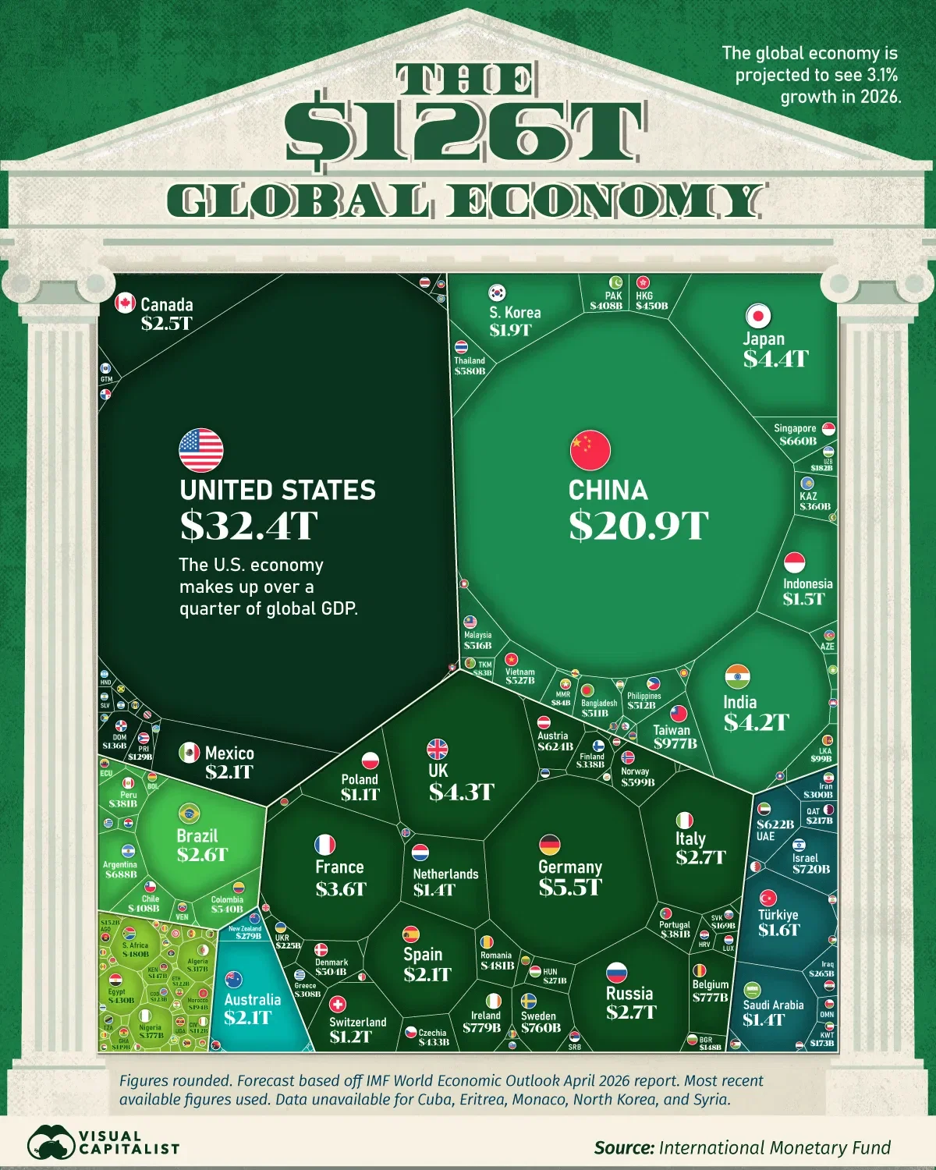
“The $126T Global Economy in One Giant Chart - The global economy is projected to hit $126 trillion in 2026.cJust four countries generate half of global GDP. The U.S. alone makes up over a quarter of global output. Just four countries—the United States, China, Germany, and Japan—generate roughly half of all economic activity worldwide. The U.S., China, Germany, and Japan together produce over $63 trillion in output—roughly equal to the rest of the world combined.”, Visual Capitalist & The international Monetary Fund, May 6, 2026
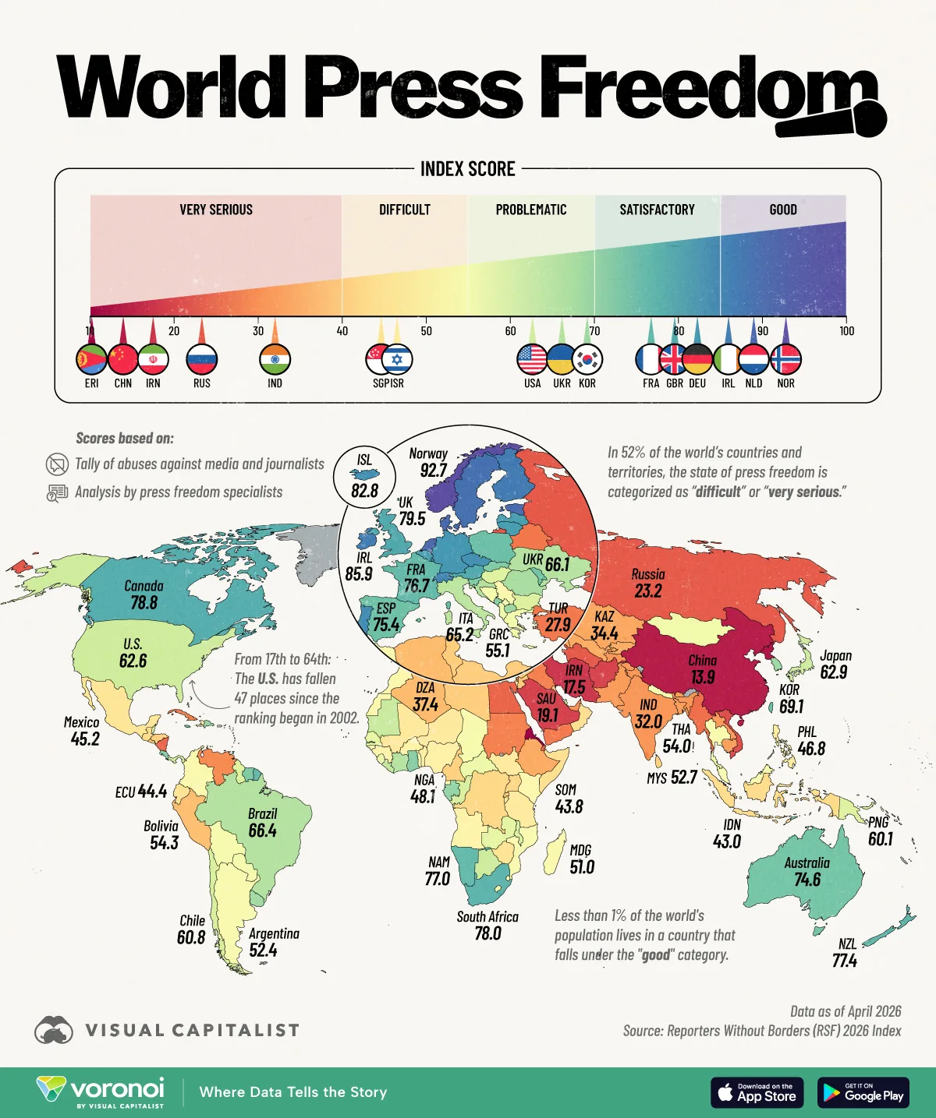
“Press Freedom Around the World in 2026 - Less than 1% of the global population lives in a country rated as having “good” press freedom. More than half of countries and territories now fall into the “difficult” or “very serious” categories, up from 13.7% in 2002. The U.S. ranks 64th globally in 2026, down from 17th when the index began. The global state of press freedom has reached a 25-year low, according to the latest World Press Freedom Index from Reporters Without Borders (RSF). The index ranks 180 countries and territories based on five indicators: political context, legal framework, economic context, sociocultural context, and journalist safety. This world map shows press freedom scores around the world in 2026, revealing a widening divide between Europe, the only region with countries rated “good,” and much of the rest of the world.”, Visual Capitalist & Reporters Without Borders, May 31, 2026
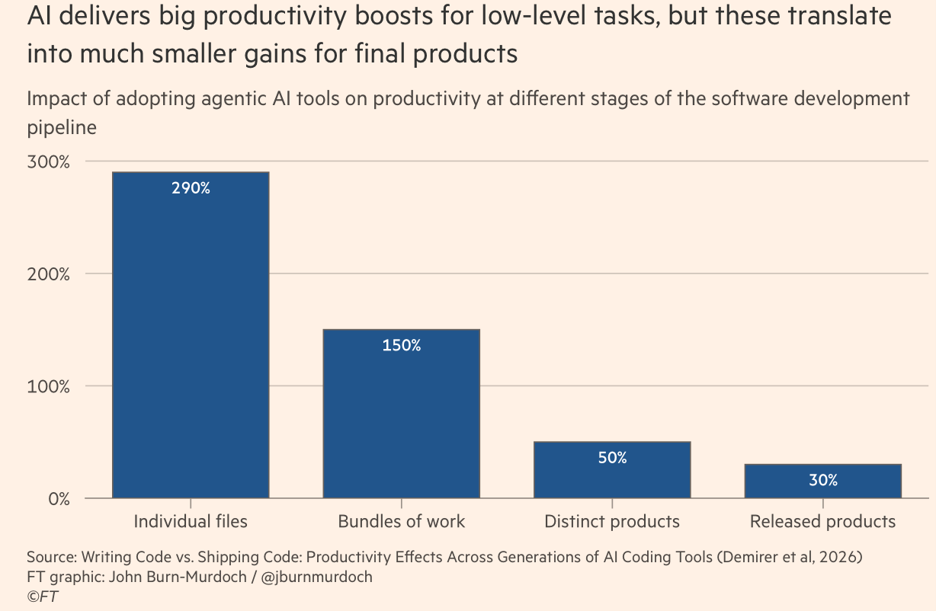
“How much value is AI really creating? Eye-opening changes to the speed and volume of work are not always translating into genuine productivity. The study by MIT’s Mert Demirer and co-authors tracked software developers’ work before and after they adopted AI tools. Notably, the finding that productivity and value creation have been much weaker than some assumed landed at a time when Uber CEO Dara Khosrowshahi revealed the company had blown through its entire AI budget for 2026 in one quarter, and was planning to switch much of its AI use to lower-cost models, reserving frontier tools for special cases. Then came new research on AI use for legal work, which found that pairing cheap open-source AI agents with top-end models acting as sporadic “advisers” delivered better results at much lower cost.”, The Financial Times, June 5, 2026
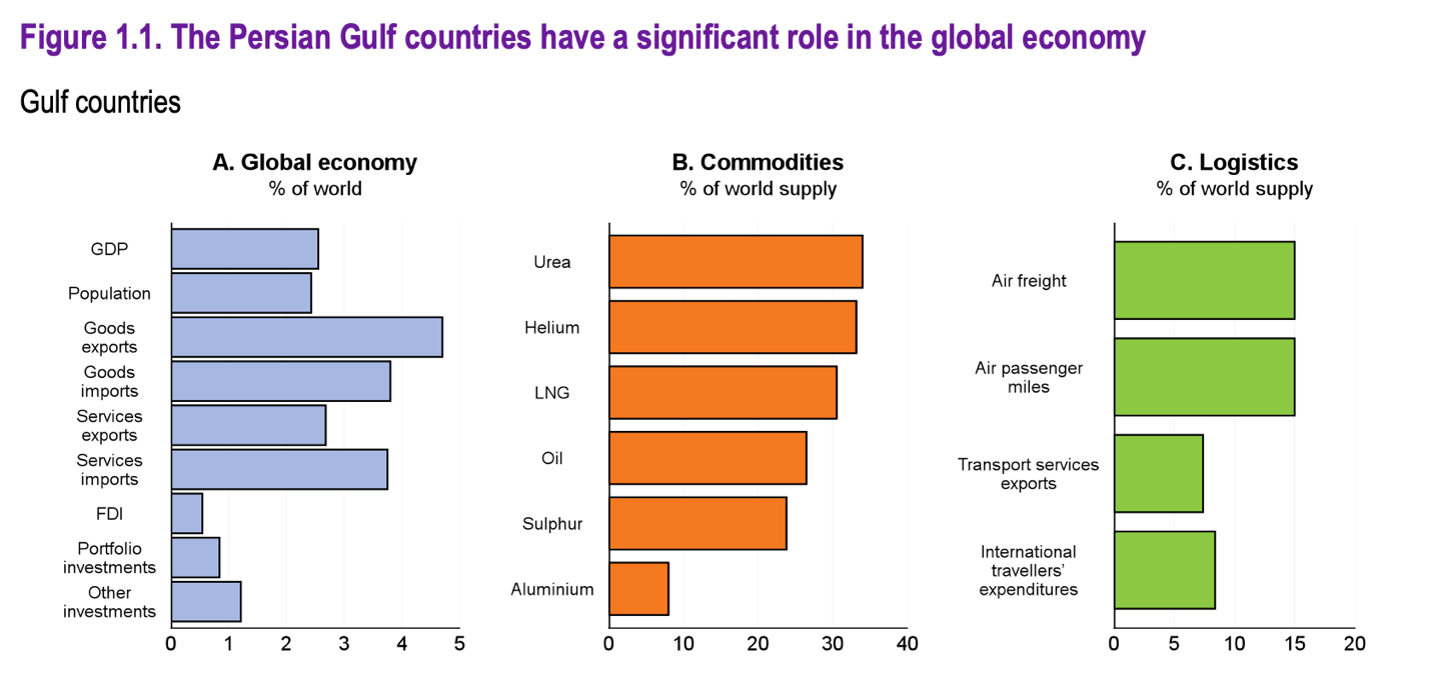
“OECD Economic Outlook Under Pressure - The conflict in the Middle East has become the dominant force shaping the global economic outlook. The world economy entered 2026 stronger than many had anticipated. Activity demonstrated considerable resilience sustained by strong investment in artificial intelligence, supportive financial conditions and easing trade tensions. Global growth prospects appeared poised for a significant upward revision. Yet the global economy is now again under pressure. Disruptions to shipments through the Strait of Hormuz, together with damage to energy infrastructure, have triggered a sharp rise in energy prices and increased the cost of fertilisers and other critical industrial inputs. Higher costs are feeding into inflation pressures, weakening confidence, and weighing on household demand and business activity.”, The OECD Economic Outlook, June 2026
